
The future of intralogistics: how connectors are driving innovation
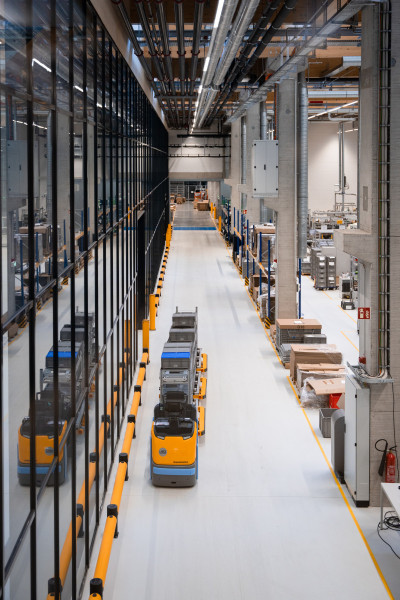 From production facilities to logistics centers that work with industrial trucks, there are many challenges when it comes to connecting or disconnecting systems in intralogistics.
As different as these challenges may seem, they are overcome by a small but powerful solution: connectors. These often-underestimated components serve as cornerstones for the implementation of current and future intralogistics trends, such as lithium-ion technology and its charging infrastructure.
Let's examine the important role of connectors, the change of technologies in intralogistics, and how to close the gap between customer needs and these developments.
A look into the future of intralogistics and how connectors fit in:
Digital twins and simulation: virtual replicas of physical assets or processes are being adopted more and more to optimize operations and improve decision-making. Communication is key as it helps operators use these models to predict and mitigate potential disruptions, optimize resource allocation, and enhance overall efficiency—and, you guessed it, connectors facilitate this critical communication. Connectors guarantee the seamless transfer of power, data, and control signals, which is vital for the operation of automated guided vehicles (AGVs), conveyor systems, and robotic arms as well as the established forklifts.
Autonomous vehicles: it is predicted that the use of autonomous vehicles in intralogistics will continue to increase, especially in warehouse and distribution centers. These technologies offer benefits such as improved accuracy, efficiency, and safety in tasks such as inventory management and goods transportation. Connectors help integrate these technologies into existing systems to ensure seamless coordination, safety, and smooth operation.
Lithium-Ion Batteries: The share of lithium-ion batteries in electric forklifts is increasing. To ensure faster charging cycles, longer lifespans, and higher efficiency compared to traditional lead-acid batteries, specially adapted charging connectors are needed.
Internet of things (IoT) sensors: IoT sensors are becoming increasingly prevalent in intralogistics for real-time monitoring and tracking of goods, equipment, and environmental conditions. These sensors collect data on parameters such as temperature, humidity, location, and vibration, enabling logistics operators to optimize inventory management, ensure product quality, and proactively identify and address potential issues such as spoilage or damage during transit.
These vast amounts of data need to be integrated into logistics systems for real-time monitoring and decision-making. By providing standardized interfaces and protocols for data exchange, connectors facilitate the aggregation and analysis of IoT sensors data, supporting predictive maintenance, inventory optimization, and quality control efforts. For data transfer in intralogistics applications, cables and connectors will continue to be crucial in the future.
Predictive analytics and Artificial Intelligence (AI)-driven optimization: Predictive analytics and AI are leveraged more and more to forecast demand, optimize inventory, and optimize transportation routes and schedules. By analyzing historical data, market trends, and other relevant factors, predictive analytics algorithms can anticipate future demand patterns and supply chain disruptions, enabling logistics operators to make informed decisions and adapt strategies accordingly. Connectors enable the integration of data from various sources, allowing operators to maximize the use of predictive analytics and AI tools.
Sensor technology for safety: Sensor technology is changing safety in intralogistics by providing real-time monitoring and tracking of goods, devices, and environmental conditions. Advanced sensors in connectors capture and manage data on critical parameters like temperature spikes caused by high loading currents. A sophisticated locking mechanism, equipped with a switching element, ensures safe, load-free disconnection of the system, while an integrated CAN bus continuously oversees the charging processes. This seamless integration of sensors not only enhances operational efficiency but also significantly mitigates risks, ensuring a safer and more reliable intralogistics environment.
Ergonomic Design: Ergonomic design enhances operator comfort and reduces fatigue through adjustable seats, intuitive controls, and better visibility. From the user's perspective, connectors are essential to integrate these features effectively, ensuring seamless and reliable operation of the adjustable and ergonomic components.
Sustainable and green logistics: with sustainability on the rise, there is a growing emphasis on adopting green logistics practices, including things like energy optimization or waste reduction. Connectors allow the integration of new technologies and processes into existing systems. For example, they help bring renewable energy sources into warehouse management systems or transportation management systems, allowing logistics operators to optimize energy usage and reduce environmental impact.
Intralogistics is being shaped by emerging trends that are changing the way we think about warehouse and distribution processes. And, as you can see, connectors play an important role in addressing common challenges and paving the way for more innovative solutions in the future.
Want to learn more?
Are you curious to learn more about certain challenges of intralogistics and see first-hand how Schaltbau connectors can provide a solution? The join our upcoming webinar taking place on Thursday, July 18th. Don't miss out - register now!