
Understanding heat sources and losses in direct current contactors
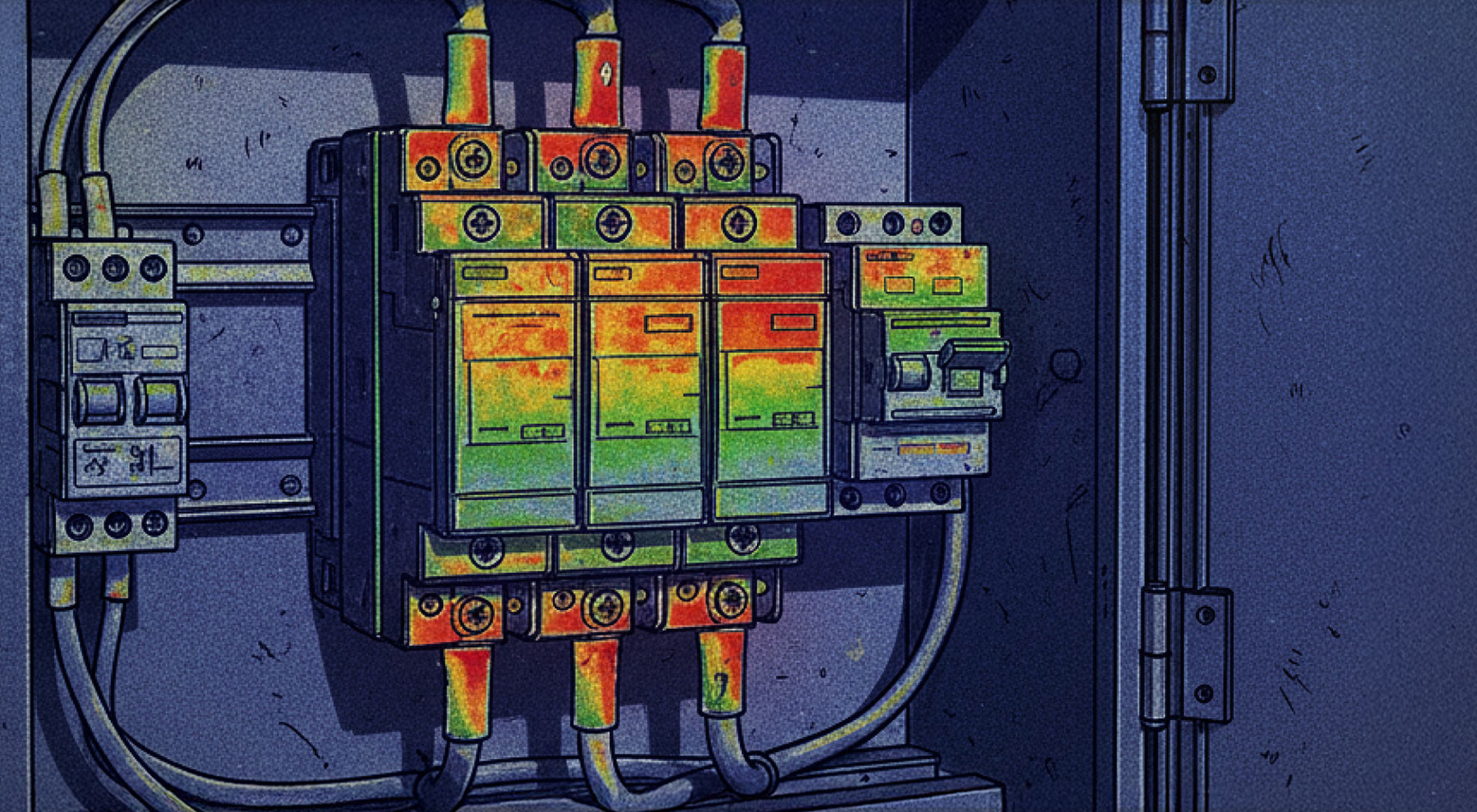
In high-current applications, contactors are designed to carry electrical current as efficiently as possible — to transmit energy, not to lose it along the way. Ideally, all input power would pass through the device without loss. In reality, however, current flowing through a resistive medium, any energized coil, and every closed contact introduce unavoidable electrical losses. These losses do not disappear; they are converted into unwanted heat.
More importantly, heat is not just a by-product in electromechanical components; it is one of the primary limiting factors for thermal performance and overall stability. To keep the contactor safe and prevent damage to plastic components, both the manufacturer and the user face challenges: the manufacturer must select appropriate materials and design an optimal geometry, while the user must ensure proper integration, including correct cabling, adequate cooling, etc. Additionally, heat translates into higher total cost of ownership: dissipated heat is nothing other than energy (and therefore money) lost along the way. Increased cooling demands can further add to system complexity and cost.
Especially in high-current DC applications, even minimal resistance leads to measurable temperature rise. While this is physically unavoidable, it must be carefully managed and mitigated through smart contactor design that takes the major loss sources at the contactor level into account.
Learn more about the main loss mechanisms in contactors and their impact on performance in our recent webinar “Heat sources and losses in electromechanical contactors”.
Choosing the right contactor parts and materials
When it comes to thermal management, not all materials within a contactor are created equal. While metals and technical ceramics in a contactor are relatively resistant to high temperatures, plastics (e.g., housing or contact bridge carriers), coil coatings and electronic components (such as economizer PCBs) are far more heat-sensitive, with adverse effects beginning at temperatures above 120 °C.
In the event of overheating, these materials and components can soften, melt, cause unwanted chemical effects, decompose, or age rapidly. Consequently, the maximum allowable and continuously possible inner temperature of a contactor, can only be as high as the maximum temperature the most heat-sensitive component within the device may tolerate. Minimizing losses at the main contacts and coil, along with using high-quality materials that are relatively temperature-resistant, is essential to maximize the performance, safety, and service life of the contactor and the application in which it operates.
Learn more about the difference between inner and outer contactor temperature – and why terminal temperature is the key indicator of contactor heat loss – in our recent webinar “Heat sources and losses in electromechanical contactors”.
Thermal behavior and application-specific evaluation
Ultimately, all loss mechanisms within an electromechanical contactor contribute cumulatively to internal heating, and terminal temperature remains the key practical indicator of thermal performance, which must never exceed the specified limits. Additionally, thermal behavior is strongly influenced by cooling conditions, current levels, duty cycle, and connection design, making each application unique. For this reason, contactor selection cannot rely on nominal ratings alone: each use case must be evaluated under worst-case conditions, and testing under real operating parameters remains the most reliable methodto verify long-term suitability, safety, and performance.
Looking for the right contactor for your application? We are ready to provide the technical and application support you need.