
How to overcome thermal challenges in megawatt charging
 When it comes to heavy-duty freight and long-haul commercial vehicles, the opportunities and challenges of electrification are equally significant. Their impact on the climate is considerable: Heavy-duty vehicles (HDV) account for more than a quarter of greenhouse gas emissions (GHG) from road transport in the European Union alone and for over 6% of total EU GHG emissions.1 Against the backdrop of global climate targets and the urgent need for decarbonization, electrifying road transport is essential. Megawatt charging is a key enabling technology to accelerate this shift before the end of the decade, particularly for vehicle classes that lack fixed routes or overnight depot-charging options (vs. e-buses or light commercial e-vehicles for inner-city or regional transport).
The promise of MCS: “Diesel-like” charging times
Although various high-power charging solutions with hundreds of kilowatts are already commercially available, multi-megawatt charging for heavy-duty vehicles is only now being developed and deployed by OEMs. While megawatt charging standards (MCS) level 2 targets up to 1.5 MW (1,500 A at up to 1,000V), MCS level 3 aims for up to 3 MW or more with current up to 3,000 A.
This could solve a critical pain point in electrification: charging times would align with typical work patterns and driver regulations. In the EU, for example, drivers are permitted 4.5 hours of driving before a mandatory 45-minute break. Under today’s CCS high-power charging standard, a 600 kWh truck charging from 10 to 80% state of charge (SoC) takes more than 70 minutes. With MCS, the same truck could charge in about 25 minutes.2 Such charging window aligns with mandatory rest periods and extends ranges, supporting long-distance freight operations without disrupting route schedules.
Thermal challenges in megawatt charging
Yet, the path to HDV electrification faces formidable roadblocks in the form of regulatory, infrastructural, and technological challenges.3 One of the most critical technological challenges is the heat generated during the charging process. Excessive heat can damage cables, connectors, and other components, or even cause high-fault currents and fire hazards. Most importantly, batteries degrade much faster when repeatedly charged under hot conditions, reducing range, lifespan and the residual value of e-trucks.
But how does so much heat build up? Because every point of internal resistance along that long chain of connections from the charging port into the batteries causes energy losses and inefficiencies. And since megawatt-level chargers push 10 to 30 times more current than a typical home EV charger, and power losses grow quadratically with current, even small amounts of resistance generate significant heat.
In a recent Schaltbau webinar, this was illustrated using the example of an average industry contactor with a 200 µOhm contact resistance. At CCS high-power charging levels, such contactor would generate 50 W of heat loss. In an MCS scenario at 1,500 A, this heat loss rises to 450 W. “That’s enormously high,” says Pavel Tomashev, Product Manager at Schaltbau. “That’s roughly the same heat as an iron or hairdryer set to medium power. You wouldn’t like to have several irons within a single switching cabinet4."
Technical solutions to overcoming MCS’ thermal challenges
So far, four main solutions have been developed to address thermal challenges in megawatt charging: (1) liquid cooling systems in stationary charging stations, (2) cooled charging harnesses that circulate a coolant directly through the power lines to keep the cables and connectors cool, (3) optimized component design to handle high loads without excessive resistance, and (4) advanced monitoring systems that continuously track temperature and other parameters, allowing for immediate shutdown if conditions become dangerously hot.
Despite the technical potential of cooling or monitoring systems, the business challenge remains: They have the potential to increase the total cost of ownership for heavy-duty EV operators, either by cutting into cargo (i.e. for additional cooling) or, more probable, into budget.
And additional operating costs add up quickly. If you increase charging current five-fold from 300 A to 1,500 A, power losses of a contactor with 200 µOhm grow quadratically by a factor of 25. As a result, the cost of wasted energy in the form of heat increases from around EUR 16 to EUR 362. Offsetting this with a cooling system would add roughly another EUR 340. Altogether, this amounts to about EUR 700/year, caused solely by inefficiencies at the contactor level.5
Choosing the right contactor for scalable and reliable MCS deployment
With the extremely high currents in MCS Levels 2 and 3, even the smallest resistance inefficiencies cause a significant portion of the energy intended for the powertrain or battery to dissipate as heat. At the contactor level, minimizing resistance is therefore imperative. Schaltbau has already introduced a new series of bi-directional contactors for Level 2 and Level 3 megawatt charging, designed to ensure efficient energy transfer and competitive total cost of ownership.
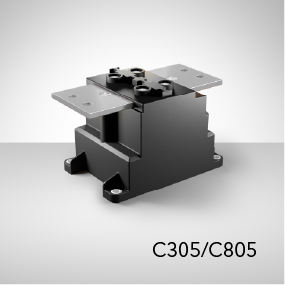 The new contactors for both stationary (C305 and C330) and mobile (C805 and C830) applications use silver alloy contact pills to achieve industry-leading contact resistance as low as 40 µOhm, delivering best-in-class performance with minimal contact warming. In practical terms: five times lower contact resistance (compared to average 200 µOhm contactors) also translates into five times lower costs.
The series also features a compact, open-isolation design that ensures robust protection under extreme conditions: permanent magnetic arc quenching without gas encapsulation prevents overheating and overpressure at all times. Even during severe short-circuit events, the contactors prevent system damage and component failure. For example, the C330 can withstand a short-term current of 15,000A for five milliseconds without contact welding — a critical safety benchmark for high-power systems.
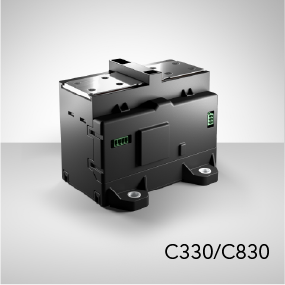 With separate contact systems for switching and current carrying, Schaltbau’s megawatt charging series also offers exceptional long-term contact resistance stability. Thanks to their compact size, these contactors are ideally suited to meet the stringent space requirements of megawatt charging stations, battery storage systems, e-mobility platforms, and other high-power industrial applications. With full bidirectionality, they are also ready for vehicle-to-grid (V2G) charging.
With the industry’s first contactors rated for 3,000A in accordance with the MCS standard, Schaltbau reaffirms its commitment to pioneering high-performance DC solutions that advance the electrification of energy and mobility.
References:
- European Commission, Reducing CO₂ emissions from heavy-duty vehicles, 2023.
- Schaltbau Webinar, How to overcome thermal challenges in megawatt charging, May 2025. Another similar calculation can be found in Froese, Michelle, Megawatt charging brings sub-30-minute charging to heavy-duty EVs, in: EV Engineering + Infrastructure, July 8, 2025.
- For more details on the regulatory and infrastructural challenges, please see Schaltbau Blog, From diesel to direct current: Powering the electrification of commercial vehicles with megawatt charging, May 28, 2025.
- Schaltbau Webinar, How to overcome thermal challenges in megawatt charging, May 2025.
- Ibid. Schaltbau’s calculation is based on the average energy cost for industrial customers in Germany in 2024 and the rough estimation of cooling system capital and operating costs.