
Vehicle-to-grid: Integrating electric vehicles into the future energy infrastructure
The future is electric — powered by clean energy, electrified transport, and smarter use of electricity in manufacturing and daily life. According to Statista, global electricity demand is projected to double by 2050 relative to 2020 levels[1] due to digitization, electrification, automation and populations becoming larger and more affluent. Managing this surging demand intelligently with a larger share of renewables in the energy mix is one of the biggest technical challenges of the foreseeable future. Vehicle-to-grid (V2G) technology is promising to play its part.
In fact, V2G sits at the intersection of two converging challenges: first, the accelerated electrification of transportation which increases electricity demand considerably, and second, the growing pressure on energy grids to integrate renewable energy sources and to manage demand peaks.
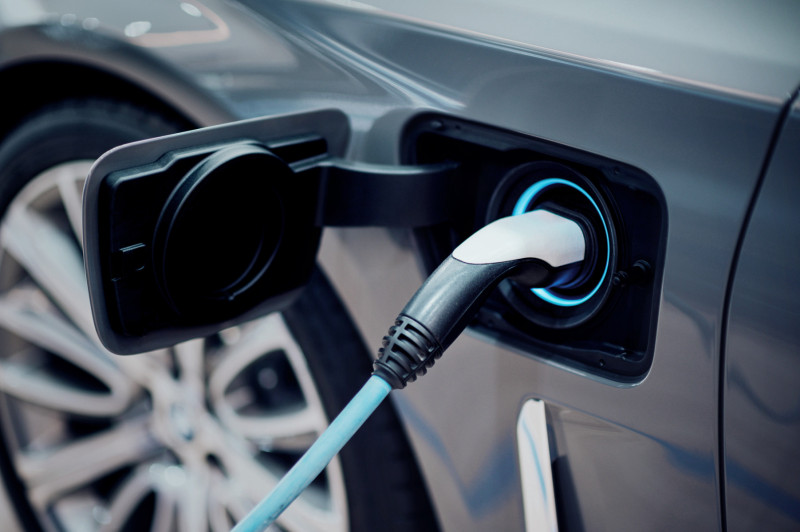 What if cars were part of the solution, not the problem
On average, private cars in industrialized countries are driven approximately one hour per day only, leaving them parked for about 95% of the time. V2G plans to turn this idle time into an advantage by using EV’s on-board battery modules as buffer storage. From this storage, they can feed electricity back into the grid in times of peak demand. Once rolled out broadly, EVs would not just consume power, but would contribute to grid stability (by reducing the probability of disruption from load variations), to more renewable integration, energy storage and resilience. In addition to grid operators, vehicle owners would also benefit by charging their EVs at off-peak times and selling electricity back to the grid at peak times when prices are higher.
Vehicle-to-home (V2H) or vehicle-to-building (V2B) are concepts in which the vehicle, photovoltaic panels on the roof, and the building are connected and in which the EV fulfills the role of electricity storage for the household: EVs can generally store more than an average home’s daily energy demand.
V2G: Plenty of potential for electrification, grid stability and energy storage …
In early 2025, the National Development and Reform Commission in China and the Chinese energy authority have announced the launch of 30 V2G pilot projects in nine cities, highlighting the potential of EVs for energy storage in real life conditions. In Europe, the Fraunhofer Institutes ISI and ISE for Transport & Environment claim that EVs could emerge as “batteries on wheels” and “virtual power plants” which have the “potential to revolutionize our energy system”. According to their study, bidirectional charging could save EU energy systems EUR 22bn by 2040 due to a reduction of generation capacity, curtailments and fuel consumption. Total savings between 2030 and 2040 could amount to EUR 175.45bn, which almost equals the entire EU budget in 2023.[2]
As a result, EVs could contribute more than 4% of Europe’s electricity demand by 2030 (equaling the energy supply of 30 million households), more than 10% by 2040[3] and could enable an additional 430 gigawatt of solar power capacity, nearly doubling the current EU capacity. The need for stationary battery storage could be cut by a whopping 92% in 2040, while backup power plant capacity could also be reduced significantly.[4]
... yet significant challenges persist
While the potential of V2G is big, so are the regulatory, legal, liability and technical challenges related to it. First off, it needs a high number of electric vehicles with bidirectional charging as well as public and private connection points to the grid. Secondly, obstacles such as lack of standardization and interoperability, with different communication protocols and inverter specifications, need to be overcome. In addition and as of yet, there are insufficient grid incentives and compensation models for grid operators and EV owners.
V2G is also considered particularly challenging since the vehicle owner would leave central control functions of the charging and discharging to the grid operator. This would affect the manufacturer’s warranty conditions, further aggregating battery degradation concerns. Since rechargeable batteries have a finite number of charging and discharging cycles – could V2G lead to accelerated battery wear and less value? That challenge is to be addressed by the joint teams of battery manufacturers, OEMs, grid operators and government.
Even though EU legislation is supporting bi-directional charging with the Alternative Fuels Infrastructure Regulation (AFIR) and updates to the Renewable Energy Directive (RED II/III), which includes mandates for interoperability and smart charging capability, and more bidirectional-capable vehicles are entering the market (in accordance to ISO15118-20), full-scale implementation is pending.
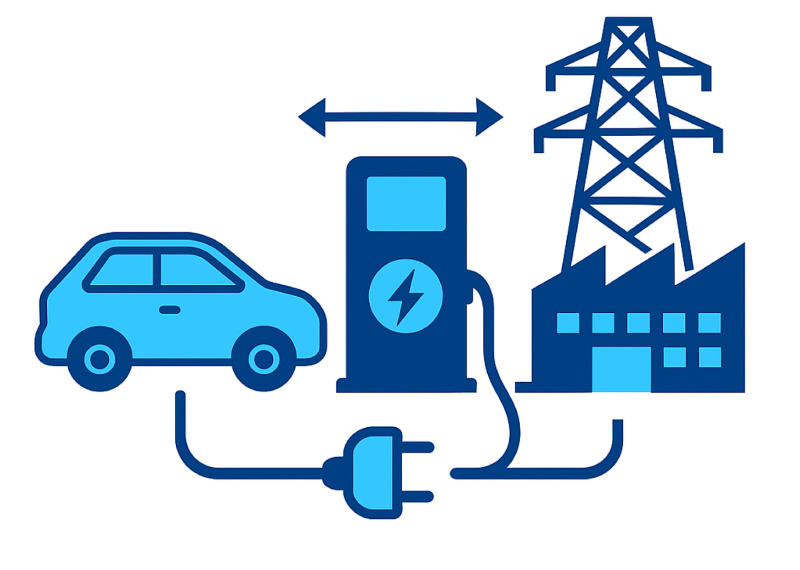 V2G-ready contactors: Engineering challenges in bidirectional power systems
V2G challenges, however, do not stop at the regulatory level but also extend to the system components of both EVs and charging stations. Firstly, DC safety and isolation requirements are very strict. V2G-ready contactors must be engineered for symmetrical arc handling and consistent performance regardless of current direction. Isolation must be maintained under all fault conditions, including routine switchings and overcurrent conditions. One of the coming trends is integration with control and monitoring systems at the vehicle and charging station, so smart contactors become particularly valuable.
Secondly, round-trip efficiency, the efficiency of the entire charging and discharging cycle, is estimated between 80 and 90%, depending on factors such as battery health, temperature, charge rate and charge state but also on system components other than the battery. These losses, however, are crucial for evaluating the economic viability of vehicle-to-grid.[5] Advanced bi-directional contactors such as Schaltbau’s C303, C305 and C330, C310 and C320, feature silver alloy contact pills of the right size and the proper contact force which significantly reduce contact warming (measuring 2 to 3 times lower than competitors). Because of their superior thermal management capabilities, they reduce heat dissipation, hence protecting components from excessive wear and maintaining an efficient energy transfer.
They also feature a compact, open-isolation concept which prevents rupture even under the heaviest failure conditions and heavy short-circuit events. Schaltbau contactors with an integrated mirror contact function for switch-state monitoring also ensure a high standard of safety for the entire system.
EVs: More than decarbonization of transport
Electric vehicles show the transport sector a clear way to decarbonization, but there are certainly more benefits to be realized if the regulatory, policy and technical challenges of V2G are mastered. As a solution provider for advanced bidirectional charging challenges, Schaltbau’s advanced contactors contribute to system-level system and reliability in complex bidirectional environments.
[1] Statista, Global energy storage - statistics & facts, February 27, 2025.
[2] Fraunhofer ISE & Fraunhofer ISI on behalf of Transport & Environment, Batteries on wheels: the untapped potential of EVs, Oct 30, 2024.
[3] EY & Eurelectric, Plugging into potential: unleashing the untapped flexibility of EVs, 2025.
[4] Fraunhofer ISE & Fraunhofer ISI on behalf of Transport & Environment, Batteries on wheels: the untapped potential of EVs, Oct 30, 2024.
[5] Joint Research Centre of the European Commission Technical Report, Vehicle-to-Grid and/or Vehicle-to-Home Round-Trip Efficiency, 2021.